
Susquehanna Waldorf School Named Best Private School in Lancaster County for the Second Year in a Row!
We have some wonderful news to celebrate! Susquehanna Waldorf School has been named Best Private School in Lancaster County for the second consecutive year! We are also thrilled to share that two of our teachers have been recognized among Lancaster County’s best. Melissa McIntyre, our current eighth-grade teacher, earned first place for Best Teacher, while Rochelle Dietz, last year’s eighth-grade teacher, was also honored as one of the county’s best teachers.
These recognitions are especially meaningful because they reflect something at the very heart of Waldorf education: the relationships between teachers, students, and families.
At SWS, we believe that truly knowing a child is one of the most important parts of educating them. Our teachers do far more than deliver lessons. They nurture curiosity, recognize individual strengths, support challenges, and help children discover who they are becoming.
As we celebrate this recognition, we are reminded of one of the greatest gifts of a small school community: the opportunity for every child to be truly seen.
More Than a Number
Every child arrives at school with their own unique combination of strengths, interests, challenges, and possibilities. Some are eager to raise their hands and share their ideas. Others prefer to observe quietly before joining in. Some find their confidence through numbers and words, while others discover it through music, movement, art, or working with their hands.
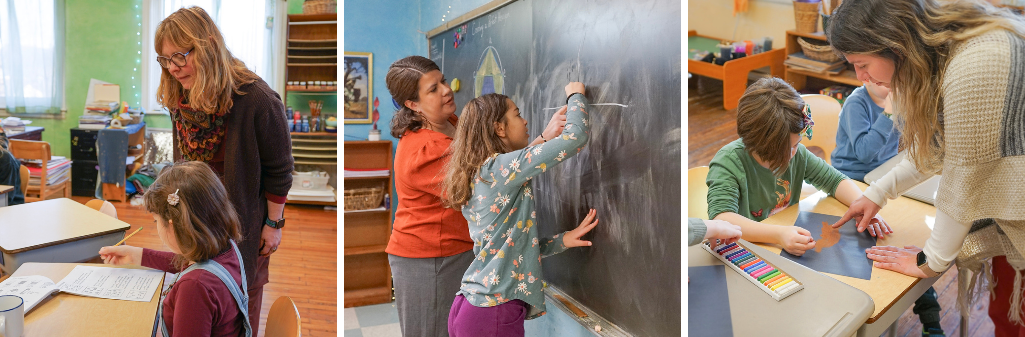
Small class sizes help create the space for teachers to recognize and respond to these differences.
In a smaller classroom, teachers have more opportunities to notice the details that might otherwise be overlooked. They recognize when a child is ready for a new challenge, when a concept needs to be approached differently, or when a student who is usually enthusiastic seems unusually quiet.
A teacher might notice that a child who struggles to express an idea in writing can explain it beautifully through drawing. Another student may need time to think before speaking, while a classmate learns best by moving, building, or working through a problem with their hands.
These observations may seem small, but they matter. When teachers have the time and space to understand each student, they can individualize each student’s learning experience, based on their unique learning style and strengths.
Relationships That Grow Alongside the Child
One of the distinctive aspects of Waldorf education is the importance placed on long-term relationships between teachers and students.
In the traditional Waldorf model, a class teacher may accompany students through multiple grades, sometimes from first through eighth grade. While this isn’t always possible, the philosophy behind it remains central to our approach at Susquehanna Waldorf School.
When teachers and students grow together over time, something meaningful happens. Teachers come to understand not only how a child learns, but how they have grown.
They remember the student who once hesitated to speak in front of the class now confidently performs on stage. They recognize the persistence of a child who has worked for months to master a difficult skill. They understand the friendships, interests, and experiences that shape each student’s school day.
This continuity creates a foundation of trust. Children know they are seen not only for what they can accomplish today, but also for the person they are becoming.
Meeting Children Where They Are
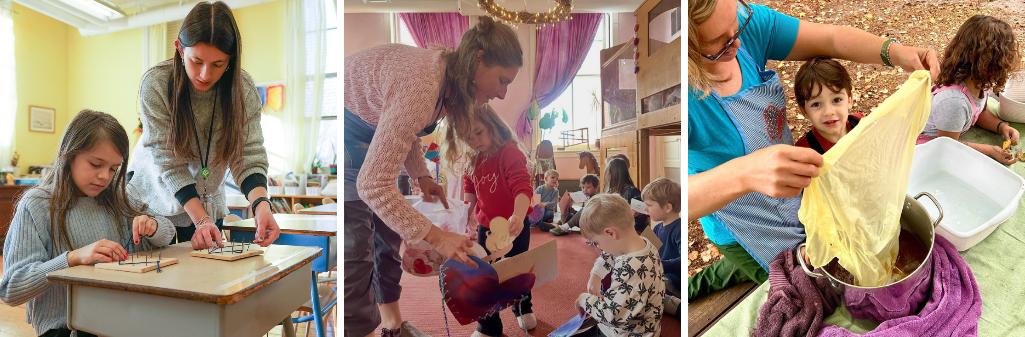
Waldorf education recognizes that children develop at different rates and in different ways. Rather than expecting every student to learn through the same approach, teachers bring academic subjects to life through a variety of experiences.
At SWS, students encounter learning through storytelling, movement, music, visual arts, practical work, and direct observation alongside rigorous academic instruction.
This approach creates multiple opportunities for children to connect with a subject and discover their strengths.
A student who finds a traditional lesson challenging may experience a breakthrough while measuring materials for a woodworking project, illustrating a scientific concept, or learning through rhythm and movement.
These experiences are not separate from academic learning. They are part of how children deepen their understanding, build confidence, and discover new capabilities.
Small classes give teachers greater flexibility to recognize these moments and help each student build upon them.
The Courage to Be Yourself
There is something powerful about being part of a classroom where you feel known.
When children trust their teachers and feel a sense of belonging among their classmates, they may be more willing to ask questions, take creative risks, and try something that feels difficult.
They learn that making a mistake is part of learning, that asking for help is a strength, and that their contributions matter.
This sense of belonging also creates opportunities for children to develop empathy and responsibility toward one another. In a close-knit classroom, students learn to recognize and appreciate the different personalities, talents, and perspectives of their peers.
They discover that community is not built by everyone being the same. It grows when each person has something meaningful to contribute.
A Partnership Between School and Home
Knowing a child also means knowing the family and community that surrounds them.
At Susquehanna Waldorf School, relationships between teachers and parents are an important part of the educational experience. Open communication, shared observations, and ongoing conversations help create a fuller picture of each child’s development.
Parents bring an understanding of who their children are at home, while teachers offer insight into who they are becoming in the classroom.
Together, these perspectives help children feel supported across both environments.
For families, there is reassurance in knowing that their child’s teacher notices the little things. Not only academic progress, but growing friendships, emerging interests, moments of courage, and the quiet milestones that might never appear on a report card.
Celebrating the People Who Make SWS Special
Being named Best Private School for the second year in a row is an incredible honor, but what makes this recognition especially meaningful is the community behind it.
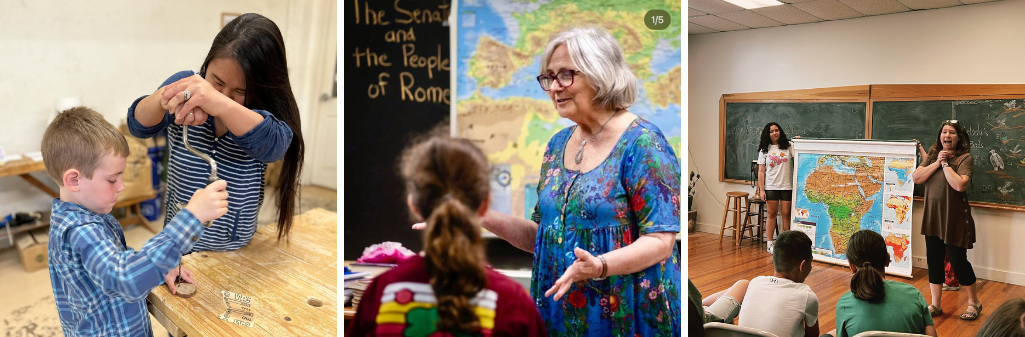
We are deeply grateful to our teachers, whose dedication, creativity, and care shape the daily experiences of our students. We celebrate Melissa McIntyre and Rochelle Deitz for their well-deserved recognition, and we recognize the entire SWS faculty and staff whose work makes our school such a special place to learn and grow.
We are equally grateful to our families, who trust us with their children, contribute to our community, and partner with us in the important work of education.
These awards are a wonderful reason to celebrate, but the greatest reward is found in the everyday moments that make our school what it is: The teacher who notices when a child needs encouragement. The patience to explain something one more time. The celebration of a small victory that represents an enormous step forward for one student.
At Susquehanna Waldorf School, small class sizes are not simply about having fewer students in a room. They are about creating more opportunities for connection, understanding, and growth.
Because every child deserves more than an education that measures what they know.
Every child deserves to be known.